
How many grams does aid smell like? The honest answer
25 de February de 2026
How an operational scent is developed: from the laboratory to the field
29 de April de 2026
Often, when we buy or put together a dog training kit, we focus all our attention on the lure. Naturally, we want it to be selective, safe and to replicate a real scent. However, there are other key elements within the kit that are often overlooked and which can be just as important as the lure itself. It is precisely these components that facilitate correct use and allow you to get the most out of your dog’s training.
When purchasing a dog training device, it is essential to ask the seller for detailed information about the product to ensure you are buying the right device. Here are some of the key elements that should not be missing.
- Chromatogram of the training aid:
Requesting the chromatogram is not a formality, it is a necessity. This analysis allows us to verify the device: Does it contain the actual substance or just similar compounds? Is there any degradation? By comparing the chemical signatures with the actual analyte, we ensure that the dog’s training is accurate. Without this transparency, it is impossible to guarantee that the animal is working with an authentic scent profile.
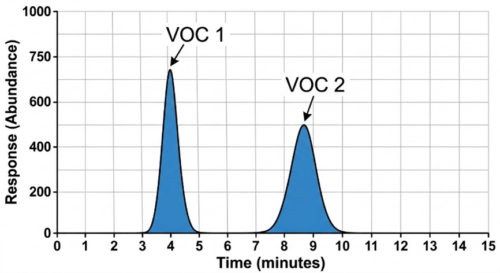
Figure 1: Representation of a chromatogram of the aid.
It should be noted that there are cases in which the actual substance does not contain volatile compounds; consequently, these will not appear on the chromatogram and are unlikely to be detected by the dog. In such situations, the compounds characteristic of the aid may correspond to degradation products of the target molecule, the very same compounds the dog will encounter when faced with the actual analyte.
- Blank chromatogram:
It is not enough to analyse the training device; it is crucial to have a blank chromatogram to compare with that of the device. By ‘blank’ we mean the inert carrier of the aid, that is, the material to which the molecules used during the training bait creation process are added. The aim? To verify that the blank does not contain the target substance but does contain the rest of the accompanying compounds.
This comparison is vital for two strategic reasons:
- If the device uses stabilisers, these will appear in the blank. Theoretically, this allows the dog to be ‘taught’ that these compounds are not the target. However, be careful! Distinguishing between the two devices can pose an excessive cognitive challenge that hinders training progress rather than helping it.
- In the case of a physical carrier, the blank chromatogram will detect whether it releases additional compounds. These “extra signals” can contaminate the scent cone and distort the dog’s detection ability, completely altering the fidelity.
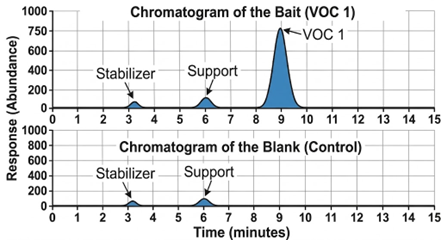
Figure 2: Chromatogram representation of aid vs chromatogram of blank.
- Device safety data sheet:
A Safety Data Sheet (SDS) is an essential technical document that details the composition, hazards, handling, storage and emergency measures for a chemical substance or mixture. It is advisable to request the device’s safety data sheet and pay particular attention to two points:
- In the list of composition, we should see at least the same components as those shown in the device’s chromatogram. In some cases, we may find additional components related to non-volatile compounds present in the device. It is important to monitor these compounds to take the various risks into account.
- When identifying risks, we must ensure that these are non-existent or, at most, minimal. Furthermore, when dealing with European Union regulations, it is essential to check the relevant pictograms. If risks appear in the safety data sheet that are not associated with any pictogram, we must remain vigilant: every risk must be accompanied by its corresponding pictogram and be correctly described in the sheet.

Figure 3: Pictograms that can be found on safety data sheets.
- Test results with dogs:
Chemistry provides the foundation, but canine behaviour reveals the reality. It is not enough for the device to be ‘chemically correct’; it must be operationally effective. For this reason, it is essential to request documented test results using dogs that have already been trained. These reports are not optional; they are the necessary validation that the baits must have.
- Performance and Fluidity: How does the device affect the dog’s behaviour? We must observe whether the search is consistent or whether the device causes hesitation or changes in the intensity of the marking.
- Detection Threshold: The actual ability of the handler-dog team to locate the target substance using that specific device in different scenarios.
- Error Rate: It is essential that the report is honest and documents any instances of false positives (interference) or false negatives (failure to detect).

Figure 4: Illustrative example of results with already trained dogs.
- Study on the device’s shelf life:
It is essential to know how long the device remains effective once opened. This can directly affect the dog’s training performance, as if the device has exceeded its shelf life, the scent cone may no longer accurately represent the actual substance. Knowing this is important in order to determine how long the device can be used once it has been opened.
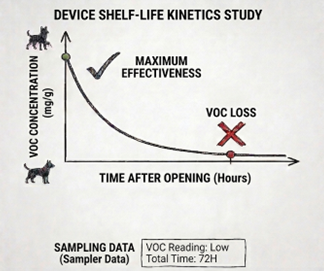
Figure 5: Representation of the device lifetime kinetics study.
- Study on the device’s shelf life:
It is important to know how long the device can be stored without losing its effectiveness, and under what conditions. An appropriate shelf life ensures that, even after a period of storage, the device will retain its properties and provide a scent trail representative of the actual substance when used for training. This is key to ensuring the device’s long-term reliability. For example, if we look at a study such as the one shown in Figure 6, we will conclude that storage in a freezer (-18°C) allows for optimal preservation of the baits, which remain stable for up to 24 months.
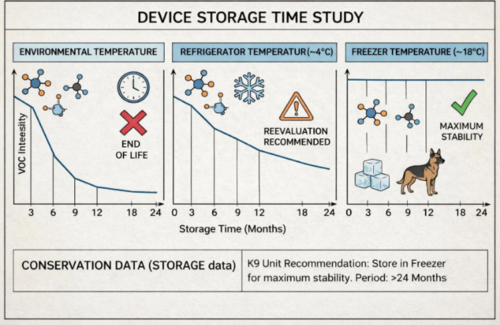
Figure 6: Representation of an example of a device conservation time study.
In short, when choosing a training lure, we must ensure that the kit is truly effective for the type of training we are aiming for. This means understanding its components in detail, assessing any risks it may pose, and managing its use and maintenance correctly in order to achieve the best results.