SUMMER TRAINING: THE CONSEQUENCES OF HEAT ON DOG TRAINING
29 de July de 2026
When training a detection dog, it is not enough simply to teach it to find a specific substance. What is important is that it learns to recognise the scent we are looking for and to distinguish it from other scents that it must ignore.
That is why, during training, it is essential to work correctly with the target substance, as well as to introduce ‘blanks’ and ‘discriminants’. This ensures the dog understands which scent to look for and which to ignore.
One of the most common mistakes is always training in the same way: using the same container, in the same setting, or always placing the sample in similar locations. The dog may end up associating all those smells and characteristics with the substance we are looking for. In other words, it may learn that the target scent is ‘the substance + the container’ or even ‘the substance + that specific location’.
That is why it is important to vary the containers, locations and methods of concealment. But variation alone is not enough. We must also present those same materials without the target substance. This is where ‘blanks’ come in.
A ‘blank’ is, basically, the same container or material we use to place or hide the sample, but without the target substance. By presenting blanks alongside the training samples, we can verify that the dog is not marking because it recognises the container, the support or the material, but because it has genuinely learnt the scent we are interested in.
The blanks can also be used as part of the distractors themselves. In this way, the dog learns that a carrier which has been associated many times with the target scent has no value in itself.
Something similar happens with distractors. In a real-life situation, the dog will never be working in an environment where only the scent we are looking for is present. It will encounter many other scents and will need to be able to ignore them in order to locate the target.
For example, it may encounter human odours, such as sweat, cosmetics, medicines or simply the scent we leave behind when handling an object. It may also encounter animal odours, such as fur, urine or faeces; food odours; or environmental odours such as cleaning products, fuels or the moisture in the ground itself. Some of these odours can be particularly intense and may even make it difficult to detect the target scent.
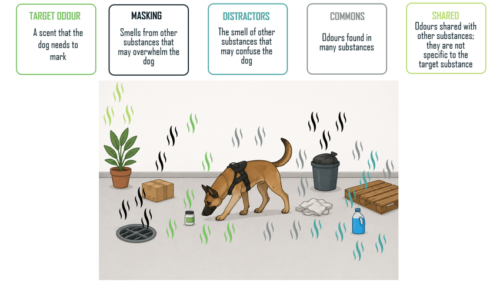
Figure 1: Different scents in a real-life situation.
That is why putting the dog in front of other dogs is a fundamental part of the training. We are teaching it to discriminate: ‘This smells, but it’s not what I’m looking for’. The more the exercises resemble the situations it will encounter in its work, the better prepared it will be to deal with them.
Furthermore, discriminants must be chosen with the dog’s specialism in mind. A drug-detection dog will not have the same needs as an explosives-detection dog. There will be common odours that can be used in both cases, but it will also be necessary to introduce those materials, substances and situations that the dog may encounter during a real-life operation. For example, the most specific discriminants for a drug-detection dog might be medicines or tobacco, whilst for an explosives-detection dog, chemicals or fuels might be used.
All of this also serves a very specific purpose: to avoid false alerts and to check the extent to which the dog is discriminating correctly. Specificity is one of the parameters that allows us to assess this aspect, and it is calculated using the following equation:

When a dog marks a blank or a distractor, this constitutes a false positive. This may occur because the material is contaminated and contains part of the target substance’s scent profile, because the dog has learnt an incorrect association during training, or, on certain occasions, due to factors such as tiredness or a need to mark. The handler must be able to distinguish between these situations and analyse why the response occurred.
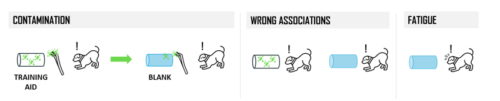
Figure 2: Possible causes of false positives.
Here, too, something that may seem secondary but is in fact not is of great importance: tidiness and cleanliness during training. Wearing gloves and using tweezers helps to minimise contamination and prevents the dog from following our own scent trail. Similarly, it is advisable to change the position of the samples between exercises and between dogs. A dog may leave saliva or other scent traces at the spot where it has worked, and the next dog could use that information to locate the sample, even if it is not actually the target scent we are trying to assess.
The ultimate aim of training with blanks and discriminants is not for the dog to find a sample simply because it recognises a container, a location or a set of odours associated with the training. We want it to be able to recognise the olfactory profile of the target substance and locate it even when it is surrounded by other odours, materials and different conditions.
When we achieve this, the training shifts its focus from simply getting the dog to mark a location to something far more important: finding the target scent by discriminating it from all the background odours. And that is precisely the ability that will ensure its work is reliable when it has to face a real-life situation.